Sunday, January 15, 2006

Rhett Butler: Cad, Lecher, Pimp
Gone with the Wind
Everyone knows the love story of Rhett Butler and Scarlett O'Hara from Gone with the Wind, the Pulitzer Prize Winning novel by Margaret Mitchell. But who is that "other woman", Belle Watling?

Belle WatlingThe movie tends to water-down some of the less savory aspects of the story — and Gone with the Wind is certainly not *about* adultery — ; yet “rape, drunkenness, moral dissipation and adultery” (the usual description) are clearly emblematic of a disfuncational relationship and of society generally.

Some have actually asserted that a Rhett Butler would go to a whorehouse after an argument with his wife for the conversation alone. Here are a few such arguments from the original novel by Margaret Mitchell. This conversation indicates that Rhett doesn't consider Scarlett his wife (so it really isn't cheating).

Rhett and Belle together“And as for you being my wife-you haven’t been much of a wife since Bonnie came, have you? You’ve been a poor investment, Scarlett. Belle’s been a better one.”

“Investment? You mean you gave her-?”

“ ‘Set her up in business’ is the correct term, I believe. Belle’s a smart woman. I wanted to see her get ahead and all she needed was money to start a house of her own. You ought to know what miracles a woman can perform when she has a bit of cash. Look at yourself.”

“You compare me-”

“Well, you are both hard-headed business women and both successful. Belle’s got the edge on you, of course, because she’s a kind-hearted, good-natured soul-”

“Will you get out of this room?”

So we see that Rhett not only has a relationship with Belle, but actually funds her operations. No wonder she has such a nice whorehouse. As Mitchell narrates,

Belle Watling, Lady of the NightBelle Watling was the most notorious of the madams... This house was something that the matrons of Atlanta whispered about furtively and ministers preached against in guarded terms as a cesspool of iniquity, a hissing and a reproach. Everyone knew that a woman of Belle’s type couldn’t have made enough money by herself to set up such a luxurious establishment. She had to have a backer and a rich one at that. And Rhett Butler had never had the decency to conceal his relations with her, so it was obvious that he and no other must be that backer.

And the clincher,

Matrons whisperIf he went to Belle Watling’s house at all, he went by night and by stealth as did more respectable townsmen, instead of leaving his horse hitched in front of her door in the afternoons as an advertisement of his presence within.
The DanceThis is the Mitchell's view of Southern culture. The seedy side exists, but everyone pretends it doesn't.

(More in comments.)

Labels: ,

Sunday, September 04, 2005

Forearmed with knowledge

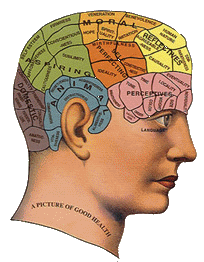
Snaring the Fowler: Mark Twain Debunks PhrenologyIn the 19th Century, a new pseudo-science emerged to join the likes of alchemy and astrology. Called Phrenology, it claimed to be able to judge the aptitudes and characteristics of people by noting the bumps on their head, which presumably would give clues to the structure of the brain within the skull. The most important of these Phrenologists was a man named Fowler.

From the Skeptical Inquirer:

Britannica: Phrenology enjoyed great popular appeal well into the 20th century but was wholly discredited by scientific research.Forearmed with a knowledge both of phrenology and the tricks of con artists, the famous author Mark Twain performed a simple single-blind reliability test. In 1872 or 1873, he visited Fowler's London office and paid for a reading using a pseudonym.

"he found a cavity, in one place; a cavity where a bump would have been in anyone else's skull. That cavity, he said was all alone, all by itself, occupying a solitude, and had no opposing bump, however slight in elevation, to modify and ameliorate its perfect completeness and isolation. He startled me by saying that that cavity represented the total absence of the sense of humor!"

Twain returned to Fowler three months later and sat for a second reading, this time identifying himself. On this occasion, the reading differed greatly: "Once more he made a striking discovery-the cavity was gone, and in its place was a Mount Everest-figuratively speaking-31,000 feet high, the loftiest bump of humor he had ever encountered in his life-long experience!"


Google Scholar: Stand on the shoulders of giants.Twain has been cited for his single-blind reliability test in the scientific literature. Here are a few other cites to Twain's scientific results from Google Scholar.

National Library of MedicineIt is the ability to make reliable predictions that is the hallmark of science. I would also note that you don't have to have a PhD to practice the scientific method. Twain was doing science, and his only qualification was his ability to see the con.

Labels: ,

Thursday, August 11, 2005

Beauty is Truth

Vase dit de SosibiosWhen old age shall this generation waste,
Thou shalt remain, in midst of other woe
Than ours, a friend to man, to whom thou say'st,
'Beauty is truth, truth beauty,—that is all
Ye know on earth, and all ye need to know.'


There are many valid statements that are not scientific, such as those often found in philosophy or the arts. Here are a few:


The sparrow falls

Claims that God knows when even the sparrow falls are not scientific claims and are not subject to validation by the scientific method.

They are matters of faith.

Labels: ,

Sunday, July 31, 2005

True Poetry

Donald Rumsfeld, Secretary of Defense, PoetThe poetry of Donald Rumsfeld, Secretary of Defense

Many people don't appreciate the depth of Rumsfeld's verse, the profound irony of his words. This is one of the true classics of 21st century political propaganda. It deserves a special place of honor.


The Unknown

As we know,
There are known knowns.
There are things we know we know.
We also know
There are known unknowns.
That is to say
We know there are some things
We do not know.
But there are also unknown unknowns,
The ones we don't know
We don't know.


What makes this a work of art?

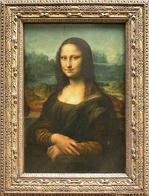
La Gioconda à la maison...The sing-song meter, the short lines, and the confident repetition of words, creates a sense of reckless self-assuredness, and evokes the simplistic understanding of the poetic speaker. Brilliant!

But beyond the mere technical virtuosity of the verse, we must attempt to understand the poetic speaker as he considers the list of unknowns. The list appears to be exhaustive and complete. Yet, the poetic speaker "forgot" one essential unknown:

But what of what we know
that simply isn't true?


Ah, the missing line. The "forgotten unknown". And now we can see the true pathetic ignorance of the poetic speaker and why the poem is of special mention in the annals of poetic propaganda. By having claimed to have listed all possibilities, but leaving out the source of his own witlessness, he ignores the source of his inevitable tragedy — his foreordained and inescapable doom. The poetic speaker has clued us in to how the play will end.

Acta est fabula, plaudite!
The play is over, applaud!


You can find more of this important artist's works here:
http://slate.msn.com/id/2081042/

Labels: ,